

AI to Support Public Decisions
How Faculty builds AI into decisions in counter-terrorism, health care and teaching
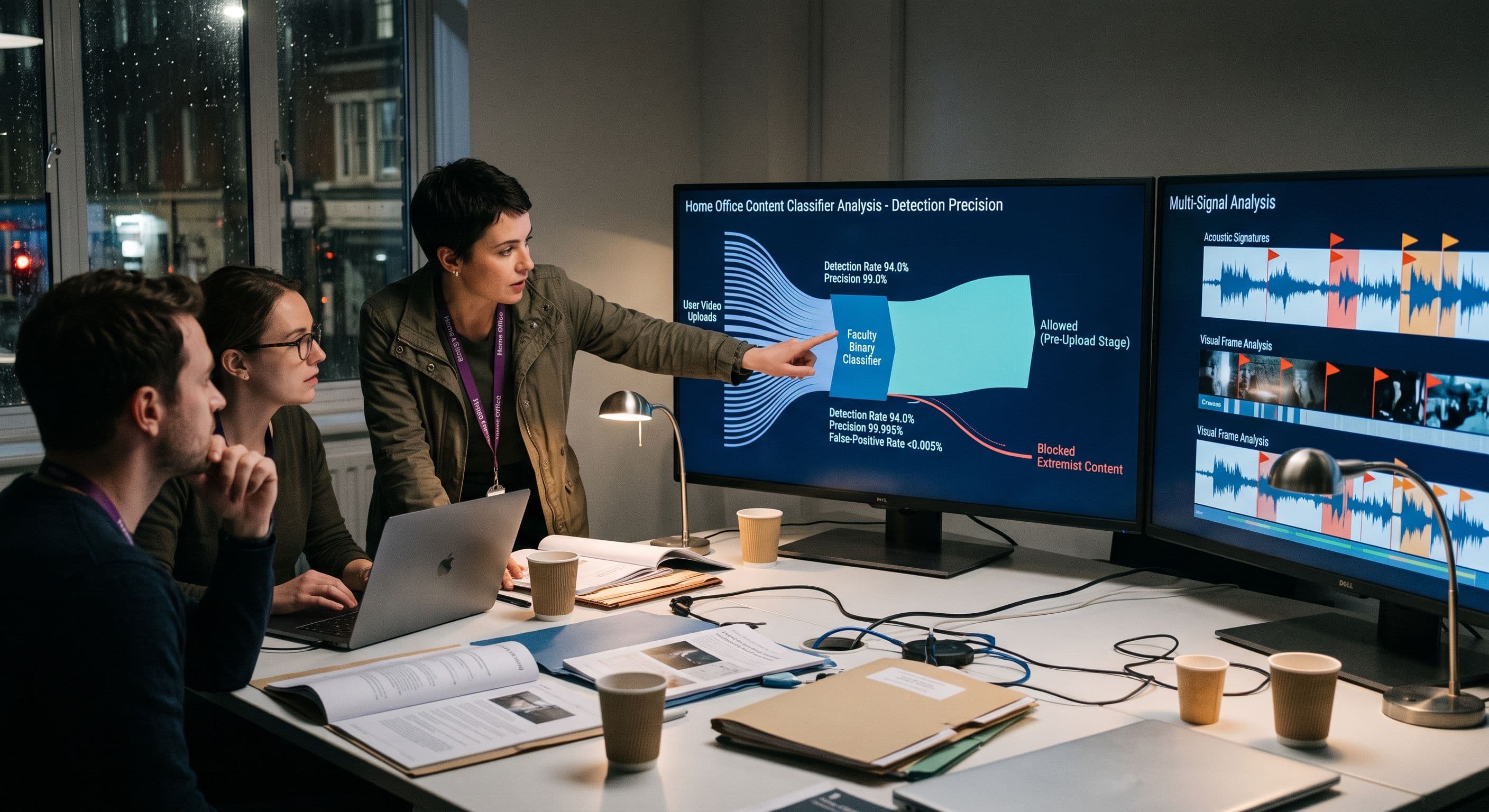
0%of Daesh propaganda detected in tests of the Home Office and Faculty tool, with 0.005% false positives
£0.0M+estimated daily savings to the NHS and government from Cera's AI-supported home care (Faculty analysis, 2025)
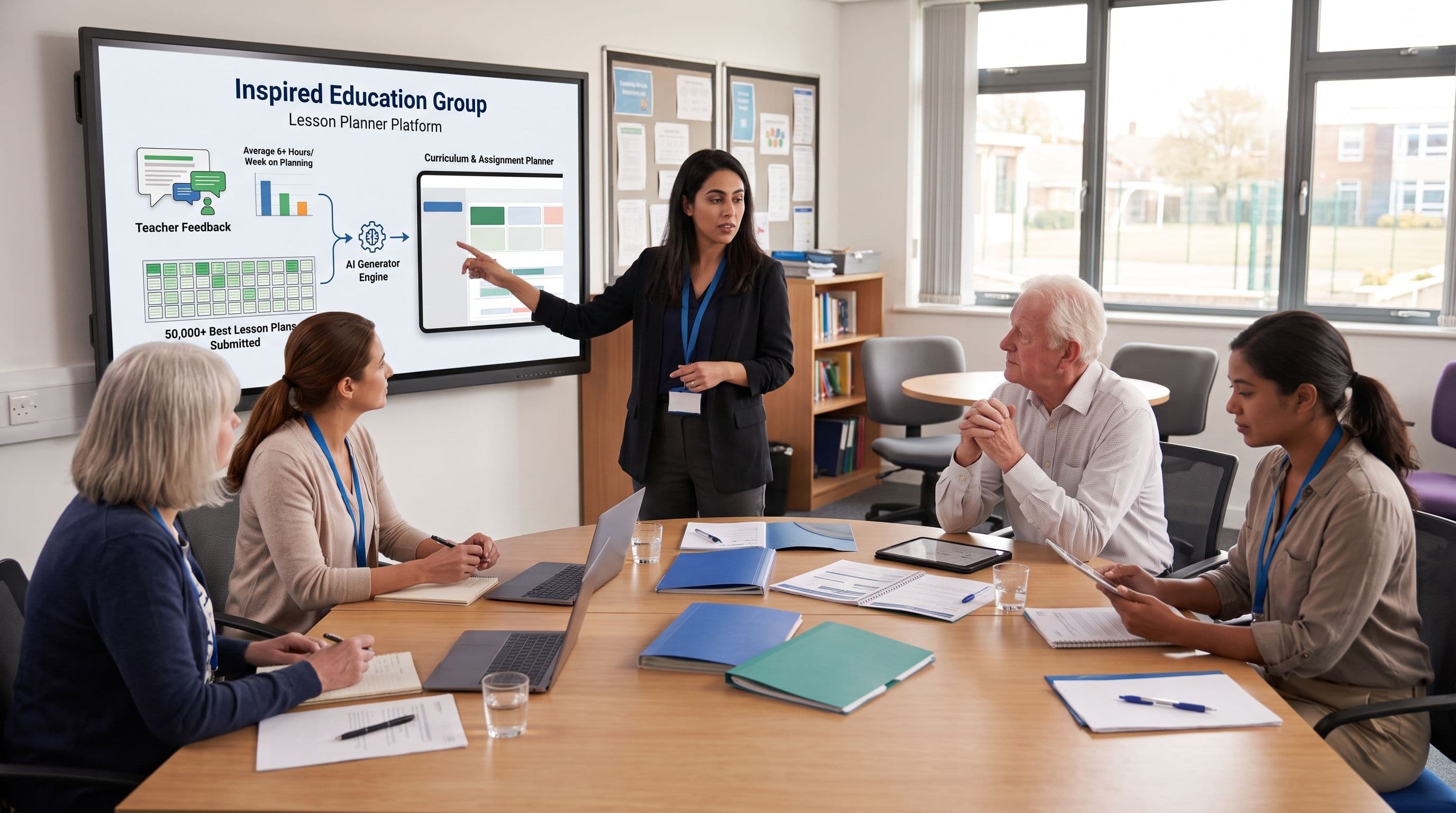
0+lesson plans Inspired Education teachers shared for Faculty's AI lesson planner
Executive Summary
The Center for Human Progress wrote this page from Faculty's published case studies and other public sources.
Marc Warner co-founded Faculty, an applied AI company in London, in 2014. Faculty builds AI into the processes organizations use to make decisions. Its projects include the National Health Service's COVID-19 Early Warning System, a tool developed with the Home Office to detect Daesh propaganda, a hospital-risk model for the home care company Cera and a lesson planner for the Inspired Education school group.
Most results below are Faculty's or its clients' own reports. A peer-reviewed paper covers the accuracy of the Cera model.
Who's behind this


Key terms
Two problems Faculty's case studies describe
Dashboards that describe without acting
In Faculty's view, AI falls short of its potential when "the output is a series of charts and dashboards that describe the world without acting upon it." In the Home Office project, the analysts who understood the propaganda worked in government, and the people who could remove it worked at the tech companies.
Admin that crowds out teaching
"A mountain of paperwork doesn't draw anyone into teaching - but it certainly drives them out of it." Inspired Education's chief information officer, Torben Lundberg, says teachers are wary of tools that add "more tracking" without helping them teach.
Three lessons from Faculty's applied AI work
Faculty's book Ten Lessons From Ten Years of Applied AI draws a lesson from each of ten client projects. Three come from projects on this page.
Building AI into operations (Home Office)
"AI is an operational discipline, not an analytical one." On this view, AI belongs inside the tools people use to run a process, linked to the actions they take. The Home Office tool was designed to run inside a platform's upload process.
Automating some tasks and supporting others (Inspired Education)
"Augment human tasks that require judgement. Automate those that don't." At Inspired, one AI tool drafts lesson materials and another drafts tests, and teachers review and edit both before use.
Testing hypotheses before modeling (Cera)
"It's data SCIENCE, not DATA science." Before building a model, the team tested hypotheses about what causes and predicts hospital admissions. Answers about bladder function, which people were uncomfortable giving, showed little link with later admissions. Drowsiness, together with other signs, could signal a likely admission several days ahead.
Case studies
Detecting Daesh propaganda with the Home Office
In 2017, propaganda from Daesh (ISIS) was spreading on the largest social media platforms, and people inspired by the group carried out a series of attacks in the UK and elsewhere. In Faculty's account, the platforms could not remove it fast enough and said accurate automated detection was not yet possible. The Home Office's Office for Security and Counter-Terrorism turned to Faculty, then called ASI Data Science, and the two developed a tool together.
The NHS Early Warning System and Cera's risk model
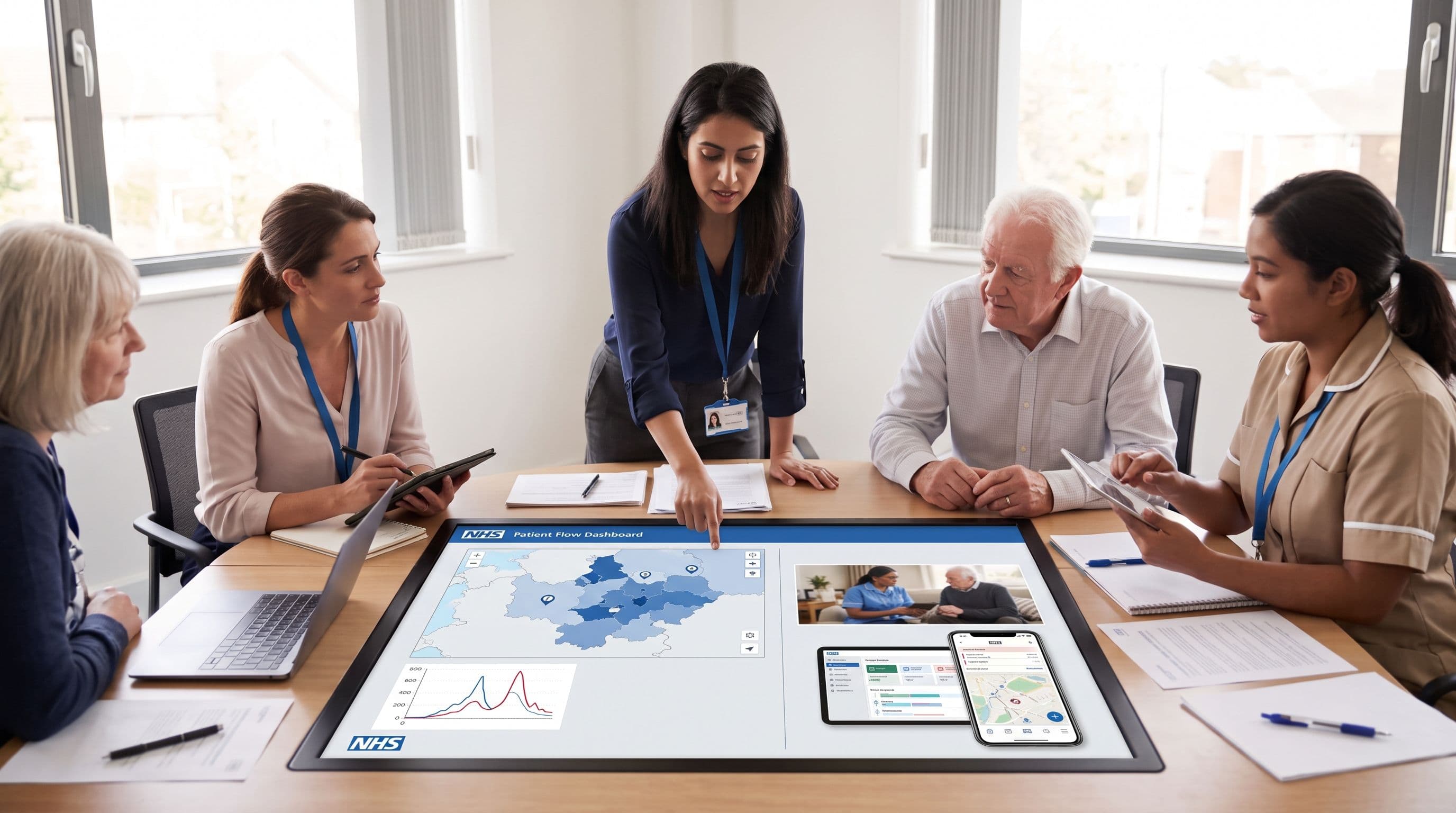
During the COVID-19 pandemic, Faculty worked with the NHS to build the Early Warning System (EWS). It forecast COVID-19 hospital demand for every NHS hospital trust in England three weeks ahead. Its models combined positive case numbers, calls to the NHS 111 helpline and mobility data from Apple and Google. The forecasts warned hospitals of likely spikes so they could move staff, beds and equipment. Faculty says the EWS had more than 1,000 users.
Lesson planning at Inspired Education
Inspired Education runs more than 125 private schools in 30 countries. Faculty helped it survey more than 700 school leaders and teachers, who reported spending on average over six hours a week on lesson planning and over four hours creating and marking weekly tests.
Who did what in three of the projects
| Row | What the software did | What people did |
|---|---|---|
| Home Office tool | Could flag likely Daesh propaganda at upload, before publication | Would review the small share of videos needing it, which the Home Office put at 50 in a million random videos |
| NHS Early Warning System | Forecast COVID-19 hospital demand for each NHS trust three weeks ahead | Used the forecasts, with other information, to plan where staff, beds and equipment went |
| Cera's risk model | Ranked home care clients each day by their risk of a hospital admission within a week | A nurse reviewed the list and arranged help, such as a GP call |
Human-led AI
Faculty says Warner founded the company "to help organisations make better decisions using human-led AI." Its Inspired case study adds that most high-value tasks "require professional judgement," and that "It is usually unwise to try and replace this human judgement."
Marc Warner
Faculty case study on the NHS Early Warning System
Questions for public bodies considering AI
These are the Center's questions, drawn from Faculty's case studies.
1. Which decision would the model inform?
Faculty says it works "decision-by-decision." On this page the decisions were which videos to block, where to send staff and equipment, and which client a nurse should contact first.
2. Which tasks need professional judgment?
Faculty's Inspired lesson separates tasks that need judgment, which AI should support, from routine tasks, which it can automate.
3. How far should staff rely on the model?
The EWS showed users which inputs drove each forecast. For the Home Office tool, YouTube engineers named the false-positive rate at which they would consider it feasible.
Published by Center for Human Progress (US) Inc., a 501(c)(3) organization