

AI / Cooperation
Anchoring Sovereign AI Capacity
Building interdisciplinary, foundational machine learning capacity through the Wits MIND Institute
0+ACADEMIC DISCIPLINES INTEGRATED (FROM NEUROSCIENCE AND ARCHAEOLOGY TO COMPUTER SCIENCE)
0+YEARS OF FOUNDATIONAL AI RESEARCH AT THE RAIL LAB (EST. 2014)
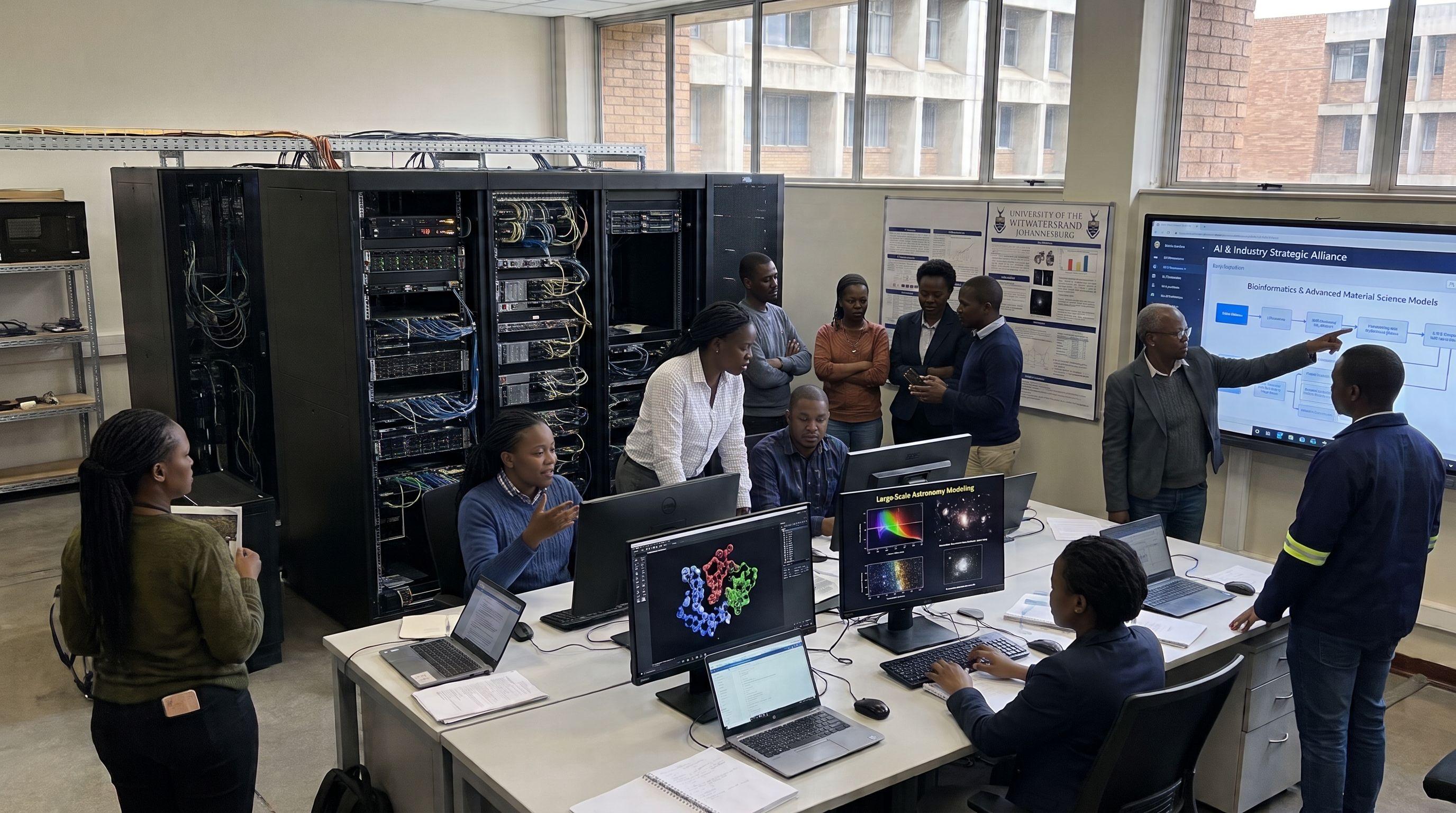
0CORE STRATEGIC FRONTIERS FOR LARGE-SCALE MODELS: MATERIAL SCIENCE, DRUG DISCOVERY, AND ASTRONOMY
Executive Summary
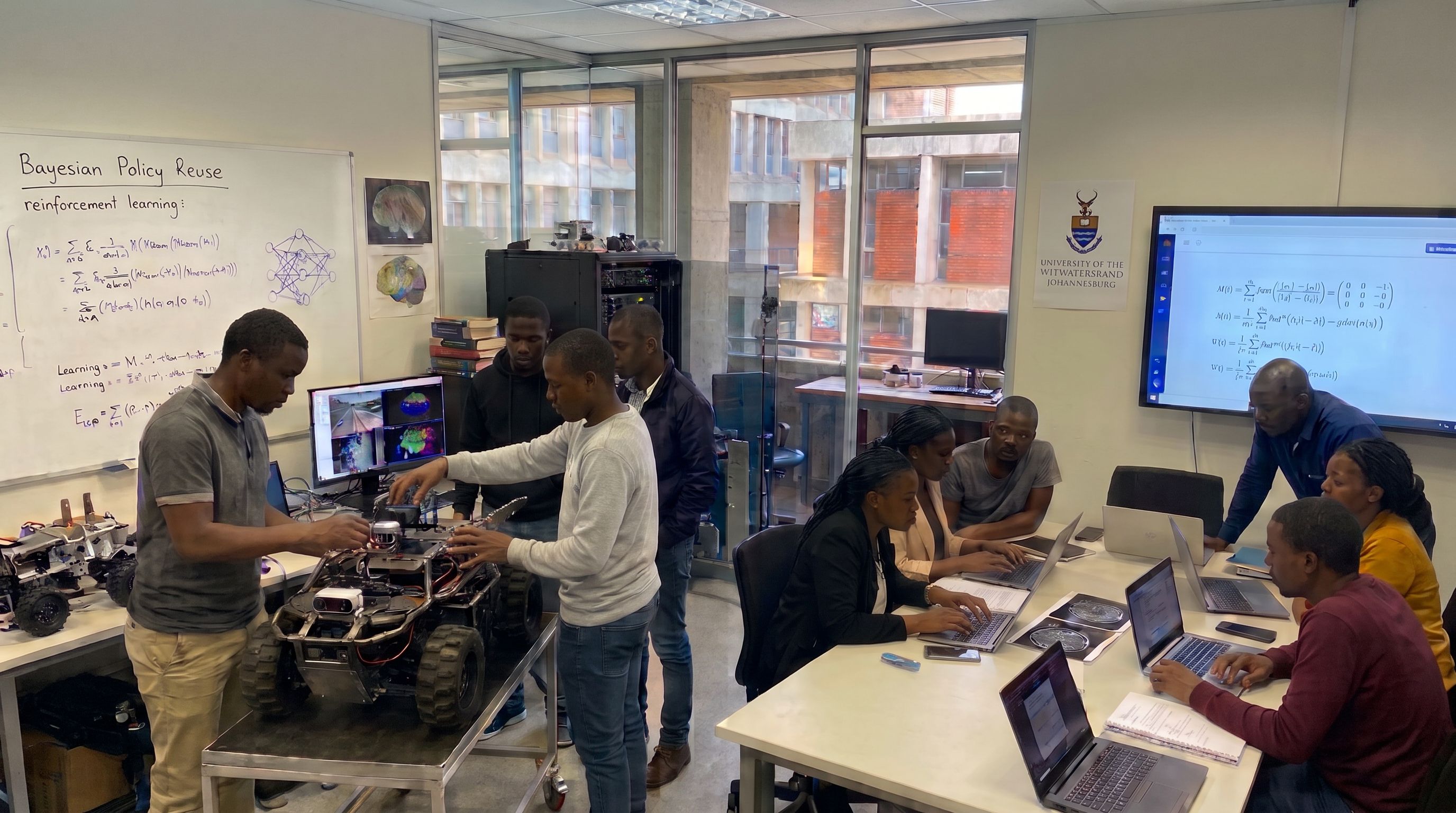
Benjamin Rosman’s framework for Algorithmic Sovereignty is realized through the Wits Machine Intelligence and Neural Discovery (MIND) Institute. Established to pioneer a localized, interdisciplinary research environment, the MIND Institute investigates both natural and artificial intelligence. Rather than waiting for foreign labs to solve regional challenges, the MIND Institute focuses on fundamental AI research that promotes breakthrough scientific discoveries, grows a critical mass of AI expertise on the continent, and ensures Africa asserts meaningful control over its technological future.
A founding perspective
Benjamin Rosman is a Professor in the School of Computer Science and Applied Mathematics at the University of the Witwatersrand (Wits). He co-directs the Robotics, Autonomous Intelligence and Learning (RAIL) Lab with Steven James. In 2024 he became founding director of the Wits Machine Intelligence and Neural Discovery (MIND) Institute. His research spans reinforcement learning and decision-making in autonomous systems. He describes his work as studying intelligence and building "the institutions that help others work on it."

Key terms
The Imperative for an African AI Institute
The Evolution of Global AI
While the pursuit of artificial intelligence dates back to the 1950s, driven by the desire to replicate human reasoning, learning, and perception, the landscape shifted dramatically in the early 2000s. Exponential growth in computing power and large datasets fueled rapid leaps in machine learning and deep learning. However, it was the public release of ChatGPT in late 2022 that truly catapulted AI from academic labs into the global mainstream.
The Commercial and Geopolitical Race
Suddenly, everyday users had access to highly adaptable, general-purpose AI, triggering widespread disruption across industries. This accessibility ignited a global gold rush: AI startups achieved billion-dollar valuations almost overnight, and legacy enterprises scrambled to integrate generative models into their core operations. In response, governments worldwide aggressively mobilized policies to fund research and development, attract elite talent, and secure their competitive edge in the new technological frontier.
Navigating the Risks
However, this rapid acceleration brings risks. The proliferation of AI has amplified concerns around algorithmic bias, privacy breaches, misinformation, and the misuse of technology. After years of warnings from technologists, global policymakers are finally taking decisive action. International agreements, such as the 28-nation Bletchley Declaration, highlight a new, coordinated global effort to establish necessary guardrails and prioritize safe AI development.
Africa’s Critical Juncture
Amidst this global acceleration, Africa faces a defining moment. While the continent possesses immense technological potential and a growing ecosystem of active development, it is constrained by severe structural hurdles, including critical infrastructure gaps, a shortage of retained talent, and underfunded research. Without decisive, strategic investments and robust institutional collaboration, Africa risks being relegated to a mere consumer of imported algorithms, rather than an active creator and sovereign leader in the future AI economy.
MIND's Strategic Pillars
To establish a robust AI research community capable of competing on the global stage, the MIND Institute is driven by four core strategic pillars:
Understanding Natural Intelligence
Uniting experts in neuroscience, psychology, cognitive science, and philosophy to probe and validate hypotheses about human and animal cognition, decision-making, and the evolution of consciousness.
Building Artificial Intelligence
Advancing foundational AI research to develop new models and algorithms. This includes a strong focus on biologically-inspired learning mechanisms, improved data and compute efficiency, and robust representation learning.
Addressing Societal Challenges
Collaborating effectively with industry and social development actors to transform AI advances into responsible, market-ready innovations that improve health, education, and prosperity across Africa.
Responsible AI
Building a future guided by ethics and responsibility to ensure technology serves humanity. This involves embedding regional values into AI, deploying human-centered systems, and shaping policy to mitigate existential risks and ensure inclusion.
The Wits MIND Institute in Action: Advancing the Frontiers of Intelligence
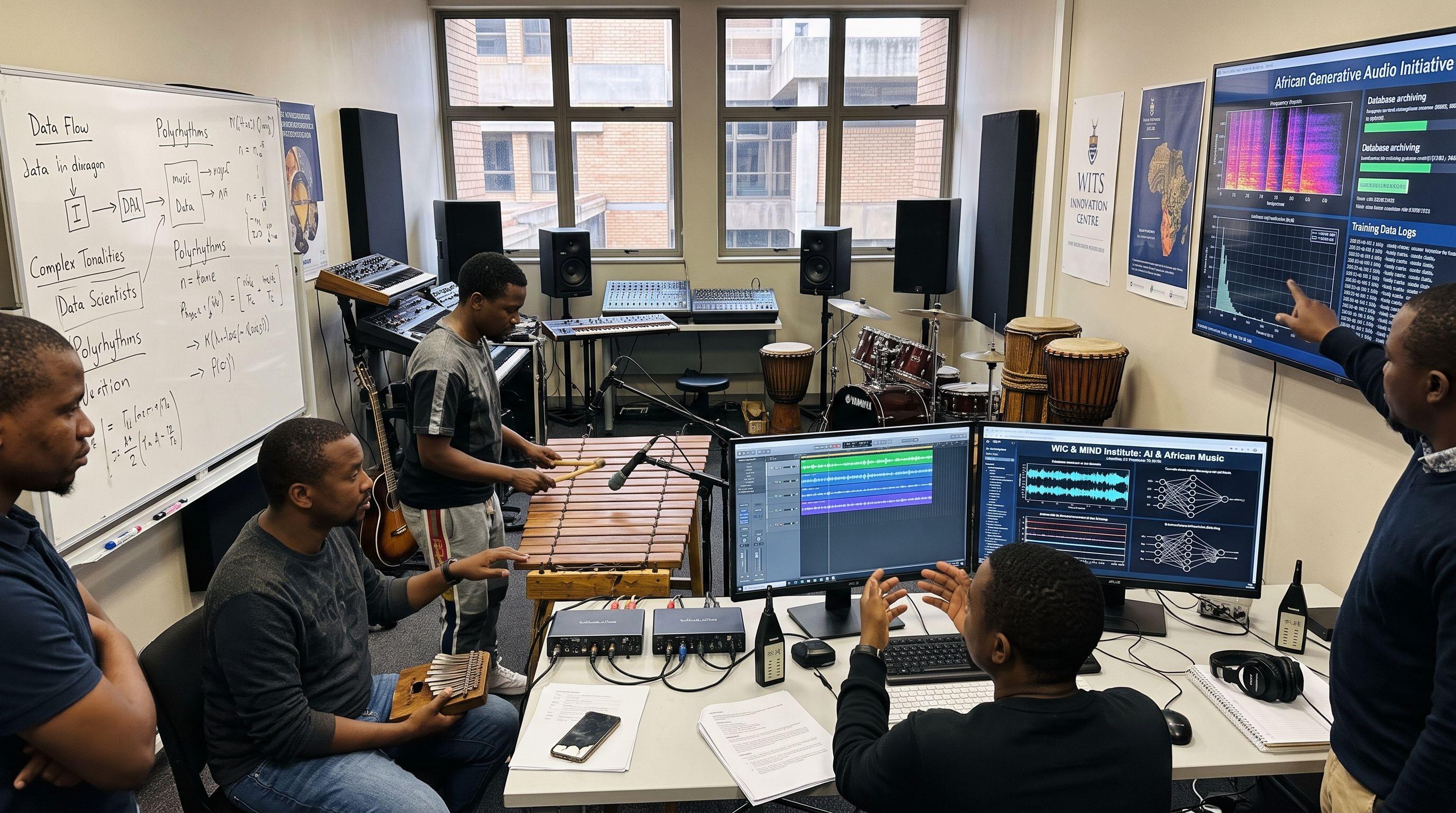
The MIND Institute facilitates tangible, outcomes-driven collaboration through a multi-disciplinary engagement model,structured across three primary areas of work:

A New Vision for Shared Intelligence
To build AI that serves humanity equitably, the technology must be deeply informed by the diverse contexts in which it operates. By anchoring advanced research within Africa, the MIND Institute ensures that the continent shapes the very architecture of future intelligence.
Benjamin Rosman
Director of the Wits MIND Institute
The Policy Blueprint: Architecting Systemic Transformation
To scale this vision across the continent, governments, universities, and funders must adopt a coordinated policy framework built on long-term investment, talent retention, and holistic research.
1. Fund the "Refineries"
Governments and philanthropies must shift funding from mere tech-awareness programs into long-term grants for deep computing infrastructure and foundational algorithmic development centers.
2. Institute Diaspora Recruitment Programs
Universities must create structured, competitive incentive packages to attract African AI faculty back from the US, Europe, and Asia to staff local research hubs.
Mandate Interdisciplinary Research
Require academic funding for artificial intelligence to include mandatory collaboration with the humanities and biological sciences to ensure technology development is holistic and culturally embedded.
Published by Center for Human Progress (US) Inc., a 501(c)(3) organization