

Human Development / Global Policy
Creating Stable Jobs for Young Africans
Building pioneer firms in export manufacturing and labor mobility
0–12MYoung Africans entering the workforce each year, against about 3 million new formal jobs (AfDB estimate)
0xFund estimate of a Malawian nurse's pay gain in Germany, after tax and remittances
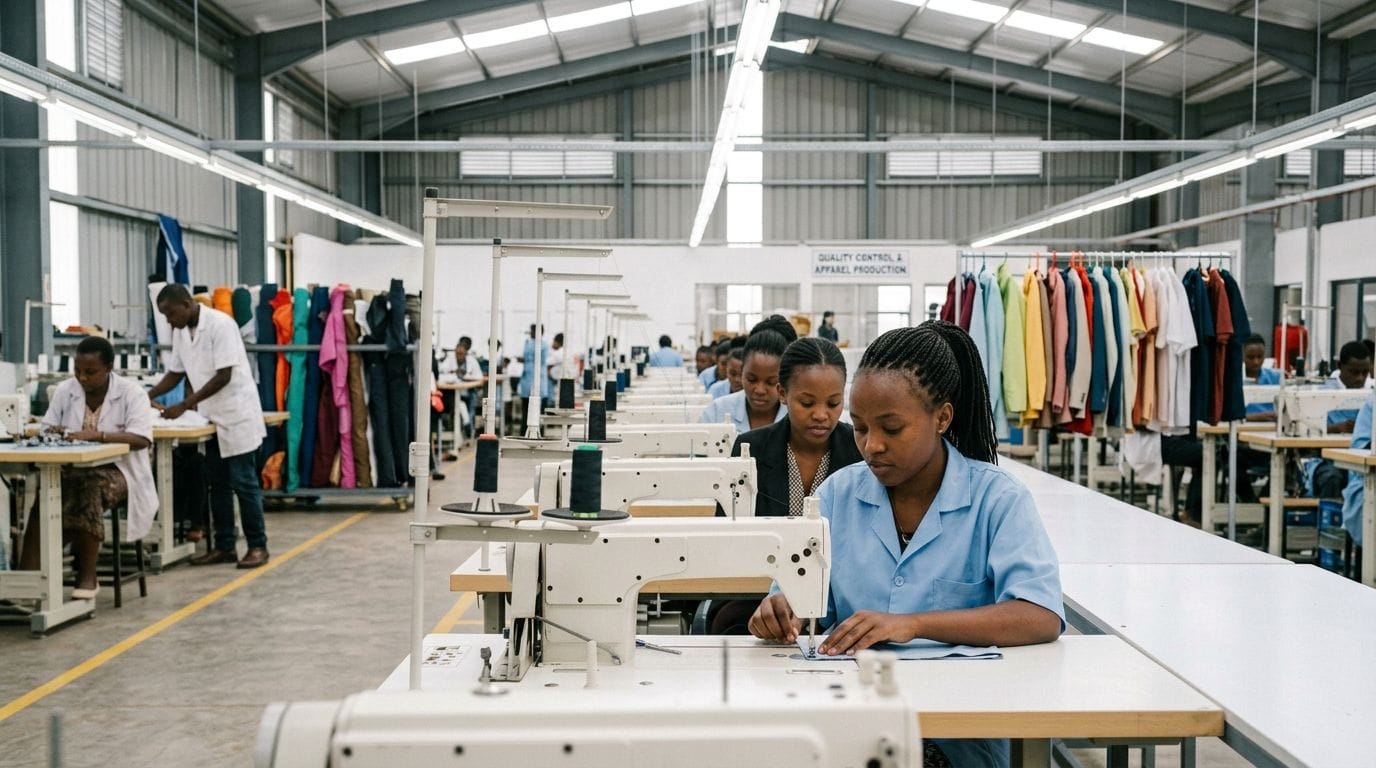
0xFund estimate of worker productivity in export factories vs. subsistence farming
Executive Summary
Most of the world's extremely poor people already live in Africa, and that share is projected to grow. Today, most young Africans who work scrape by on family farms or in informal jobs that pay a few dollars a day. The Africa Jobs Fund, led by Daniel Yu and Ben Hyman, starts and backs pioneer firms in two sectors, export manufacturing and international labor mobility. Some build factories in Africa that sell to foreign buyers. Others open ethical hiring routes that connect trained Africans to jobs richer countries struggle to fill. The fund aims to double the lifetime income of at least 250,000 people.
Who's behind this


Why few young Africans earn a steady wage
Few young Africans earn a regular wage from an employer.
One in four draws a salary
In surveys from 28 African countries, about 25% of working 18-to-24-year-olds had a salaried job, against 69% in 40 other low- and middle-income countries (Bandiera and colleagues, 2022).
Underemployment for trained workers
According to the Nursing Council of Kenya, about 10,000 nurses graduate each year and fewer than 3,000 find jobs.
Entrepreneurs by default
More than 80% of jobs in Kenya are informal, such as running a market stall or doing casual work for cash. Many of these workers would take a steady job if one were on offer.
What a steady paycheck changes
Informal work pays little, and what it pays swings wildly. June Jambiha, who sold clothes in Nairobi, made $400 one month and $60 the next. A wage is money a family can plan around.
School fees, medicine, a better home: At Wasoko, the paychecks from 2,000 mostly entry-level jobs supported more than 10,000 family members.
Money sent home: Kenyan nurses placed in Germany through Velocity say they plan to send home about €500 a month, mainly for siblings' tuition, family healthcare, and land.
Clinics and schools: Higher wages bring in more tax revenue for public services. Across countries, child mortality falls as incomes rise. In 2022, no country with income below about $7,000 per person (at purchasing-power parity) had under-five mortality below 1%.
Why the fund backs companies
A company that turns a profit can keep paying wages without new donations.
Two routes to higher pay
In 1960, South Korea and Ghana had similar incomes. South Korea started building export factories and pulled far ahead. The Philippines spent half a century building the agencies, licensing, and loans that place its nurses in hospitals worldwide. The Africa Jobs Fund backs companies in these two sectors.
A move that can benefit both countries
For the host country: In 2023 Germany had 44 unemployed qualified nurses for every 100 registered nursing vacancies, and recruitment fees for a qualified, German-speaking nurse have reached €15,000.
For the home country: By the fund's estimate, a nurse who sends home a tenth of her pay can double the income of seven relatives. Economists Paolo Abarcar and Caroline Theoharides found that when the United States expanded visas for foreign nurses, about nine more Filipinos became licensed nurses for every one who emigrated.
One company can start a whole industry
Colombia's flowers
In 1969 Thomas Kehler and partners put $100,000 into Floramérica, one of the first companies to export flowers from the Bogotá plateau. It worked out the whole export chain itself. Staff it trained later left to start their own farms. Colombia now exports about $2.4 billion of flowers a year, and the industry employs more than 200,000 people.
Chile's salmon
Fundación Chile, a government-backed foundation, showed that salmon could be farmed in Chile. Kehler followed in 1987 with Salmoamerica, one of the country's first salmon exporters. Chile's salmon industry now earns $6.5 billion a year and supports about 86,000 direct and indirect jobs.
Bangladesh's garments
In 1979 Korea's Daewoo trained 130 workers from Desh Garments in Korea. Many later left Desh to found their own factories. Bangladesh's garment industry now employs roughly 4 million workers, most of them women.
Why now
China's share of world clothing exports peaked at about 39% in 2015 and has fallen since, as Chinese wages rose. Orders moved to Vietnam, whose share more than doubled between 2010 and 2024. Vietnam now exports more electronics than clothing, and Yu argues that entry-level production is moving again, with Africa a logical next stop.
Rich countries are aging. The OECD had 5.3 working-age people for every older person in 1980 and is projected to have 1.9 by 2060.
Germany opened a new route for skilled foreign workers in 2024, and Italy has expanded its work-entry quotas for 2026–2028.
Why the first firm doesn't get built
The evidence for both routes is strong, but in many countries no company has opened them yet. The first company bears costs that later companies avoid, which is one reason few companies go first.
In the fund's first months, the hardest part on both routes was securing committed buyers and employers abroad, not finding workers or products. The fund now treats confirmed foreign demand as its main test for backing a new venture.
How the fund builds pioneer firms
Most investors wait for companies to pitch them. The Africa Jobs Fund creates the companies it wants to back, because on many of the routes it targets there's no company yet to do the pitching. It also funds existing companies, such as Velocity, when they expand into new countries or lines of business that commercial investors won't finance.
Scope
Pick a sector, or a migration corridor between two countries, and find what's blocking it.
Recruit
Find an entrepreneur who cares about the impact and persuade them to give the next decade to it.
Pilot
Invest $10,000 to $100,000 to test the core assumptions.
Scale
Follow with $100,000 to $2 million to place the first group of workers or run the first production line. After that, the company is meant to grow on its own revenue or with money from commercial investors.
Help on the ground
One team member flew to Malindi, Kenya, to help vet vocational colleges and partners for recruiting Italian-speaking hospitality workers.
What it builds in each sector
How the fund counts success
The fund judges every deal by its cost per Doubled Consumption Year (DCY), the benefit of doubling one person's consumption for a year. GiveWell and others use this unit to compare programs. The fund aims to spend under $10 per DCY. By its estimates, GiveWell's top charities cost about $40 per DCY, GiveDirectly's cash transfers about $100, and typical livelihood programs about $500.
The fund's first deals and programs
By September 2026, the fund had made nine investments. Eight are in labor mobility, including routes to Germany and Italy. The ninth, Exporters Without Borders, was founded by Saarthak Gupta and Niklas Piringer to build Madagascar's first freeze-dried fruit exporter. The fund is also assessing export projects in Malawi and Tanzania.
A related model: Malengo
Malengo, founded by economist Johannes Haushofer, pays for school-leavers from low-income Ugandan homes to study in Germany. Graduates then pay back a percentage of their later earnings under an income share agreement.
Economists Toman Barsbai, Marcello Pérez Alvarez and Matthias Sutter lead an ongoing randomized trial of the program. In preliminary results, students earned about $843 a month more than a comparison group (adjusted for purchasing power) after an average of 1.3 years in Germany. Their parents also reported better psychological wellbeing.
Malengo's model relies on graduates earning enough to repay its costs. As of fall 2025, two of the roughly 250 students it had sent to Germany had returned home.
Velocity: German training and hospital jobs for African nurses
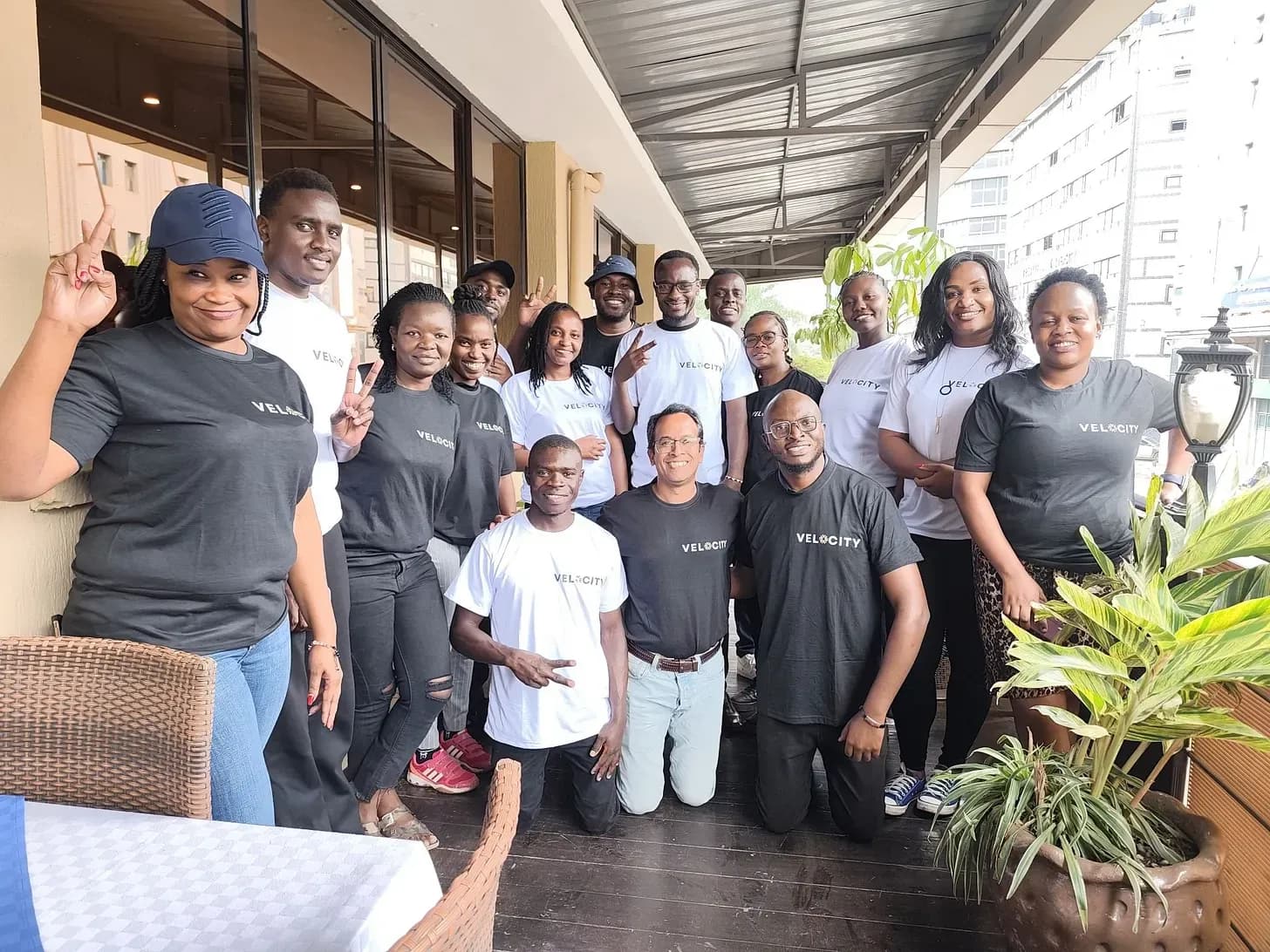
Velocity, founded by Lalit Kumar, Siddharth Gusain and Betty Chelangat, launched in Kenya in June 2025 and has placed Kenyan nurses in German hospitals. The fund's investment pays for Velocity to expand its German language training to Malawi and Zambia.
Export manufacturing: building the team
A manufacturing venture builder: Anteneh Tesfaye was on the founding team of Komari Beverages, one of Ethiopia's largest beverage companies, and helped launch the country's first hard seltzer. He now builds the fund's factory ventures.
A fellowship for factory operators: The program, launched in July 2026, places early-career and senior people in operating roles at African manufacturers for one to two years. Afterward, some fellows may start their own export business with the fund's backing. It builds on a similar fellowship that Masika Ventures ran for two cohorts in Tanzania.
Will these jobs last, and who benefits?
What success would look like
The fund aims to make 15 investments in 2026 and 50 in 2027. It hopes successful companies will be copied, as Floramérica was in Colombia, because each one shows the next founder that a route works.
Sub-Saharan Africa has the youngest workforce in the world. The African Development Bank has estimated that 10 to 12 million young Africans enter the workforce each year, against about 3 million new formal jobs.

Daniel Yu
Founding Partner, Africa Jobs Fund; founder, Wasoko
Published by Center for Human Progress (US) Inc., a 501(c)(3) organization